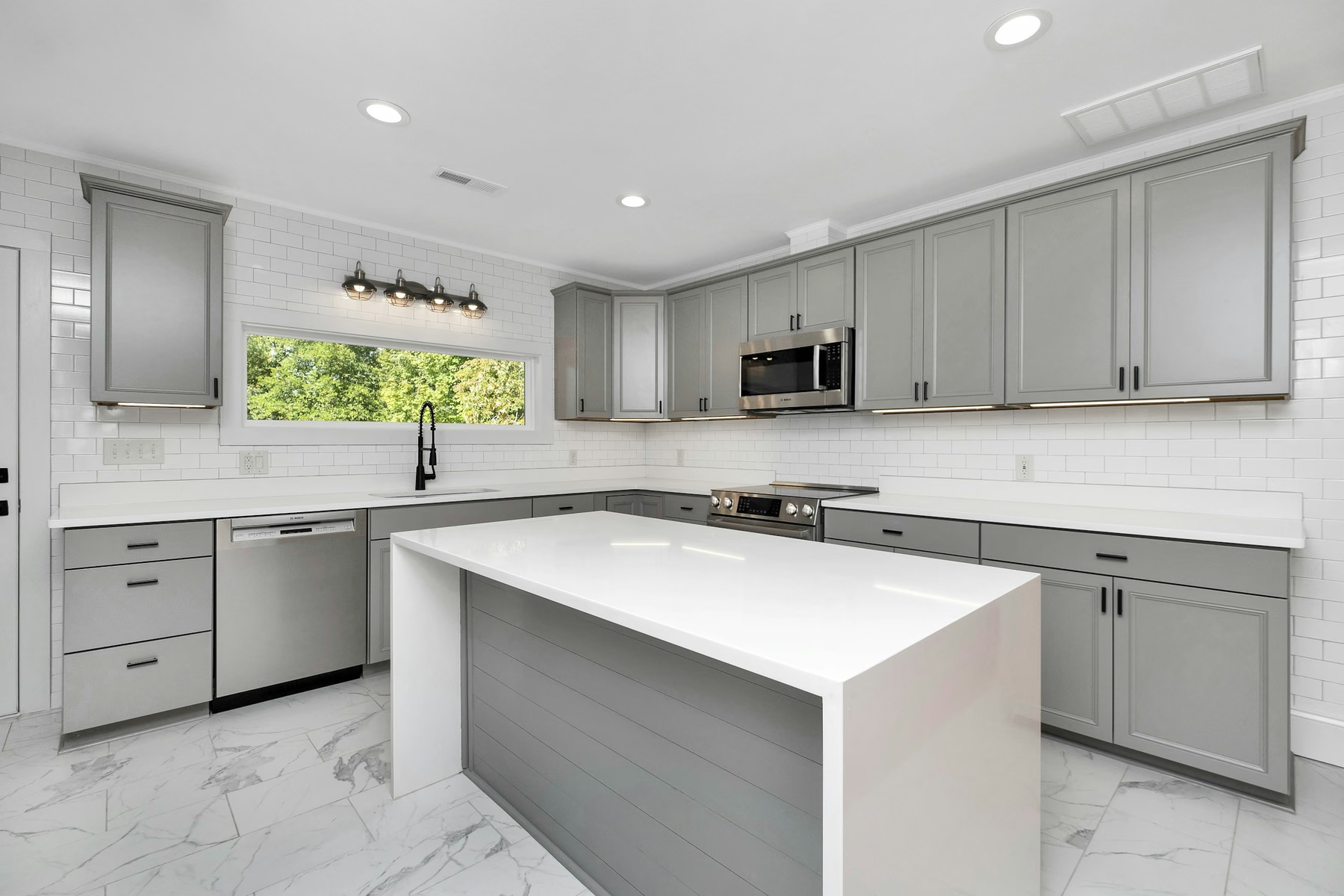
Key takeaways
- Door style sets the personality of the kitchen more than any other single choice.
- Shaker is the most versatile; flat-panel is the most contemporary; raised-panel is the most traditional.
- Match the door style to the architecture of your home, not just to a trend.
- Choose door, colour and countertop together so they support each other.
Shaker: the everyday all-rounder
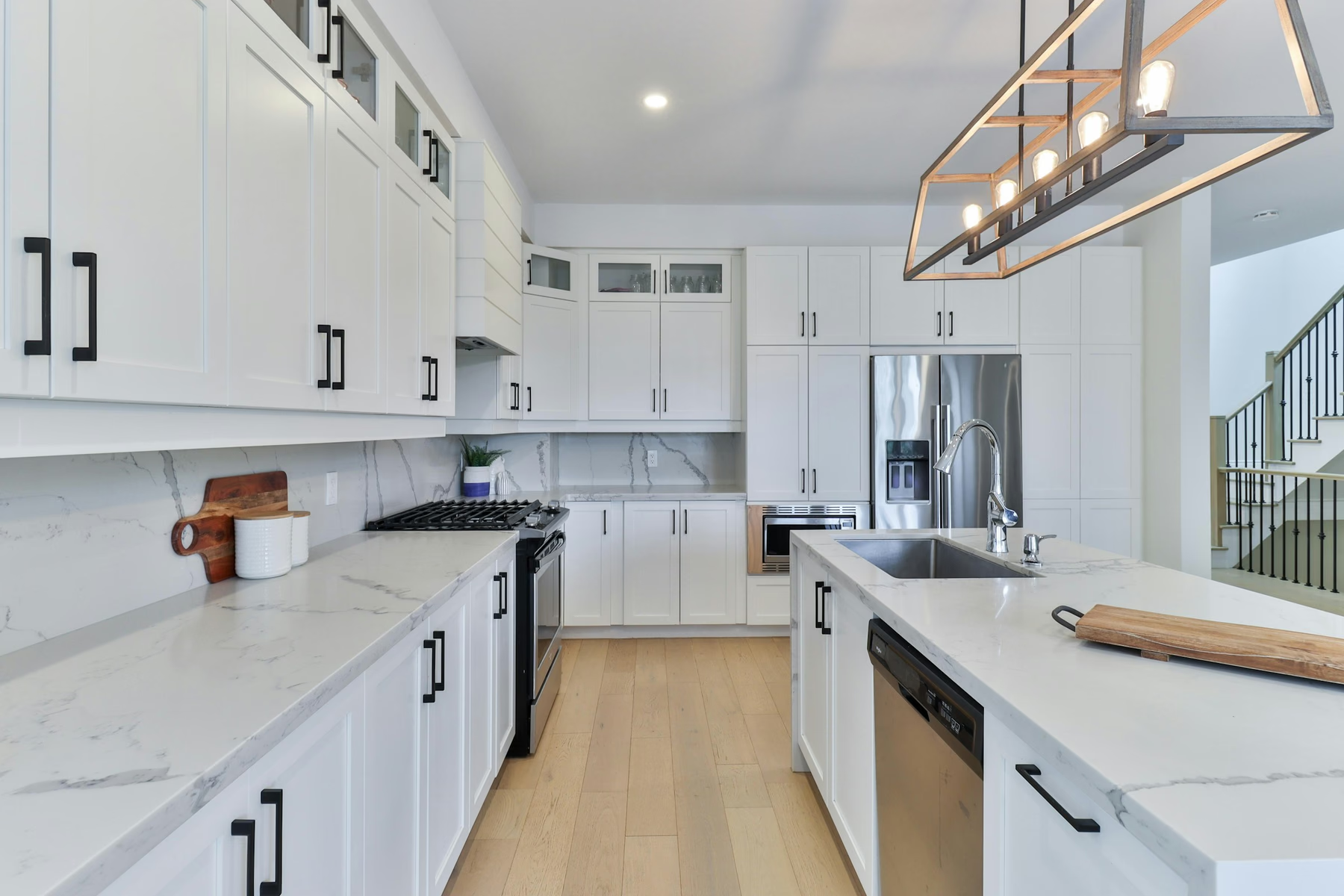
A shaker door has a flat centre panel framed by a simple, square rail. Its restraint is the reason it works in so many homes. Painted white it reads classic; in a deep colour or with sleek hardware it reads modern.
Flat-panel (slab): clean and contemporary
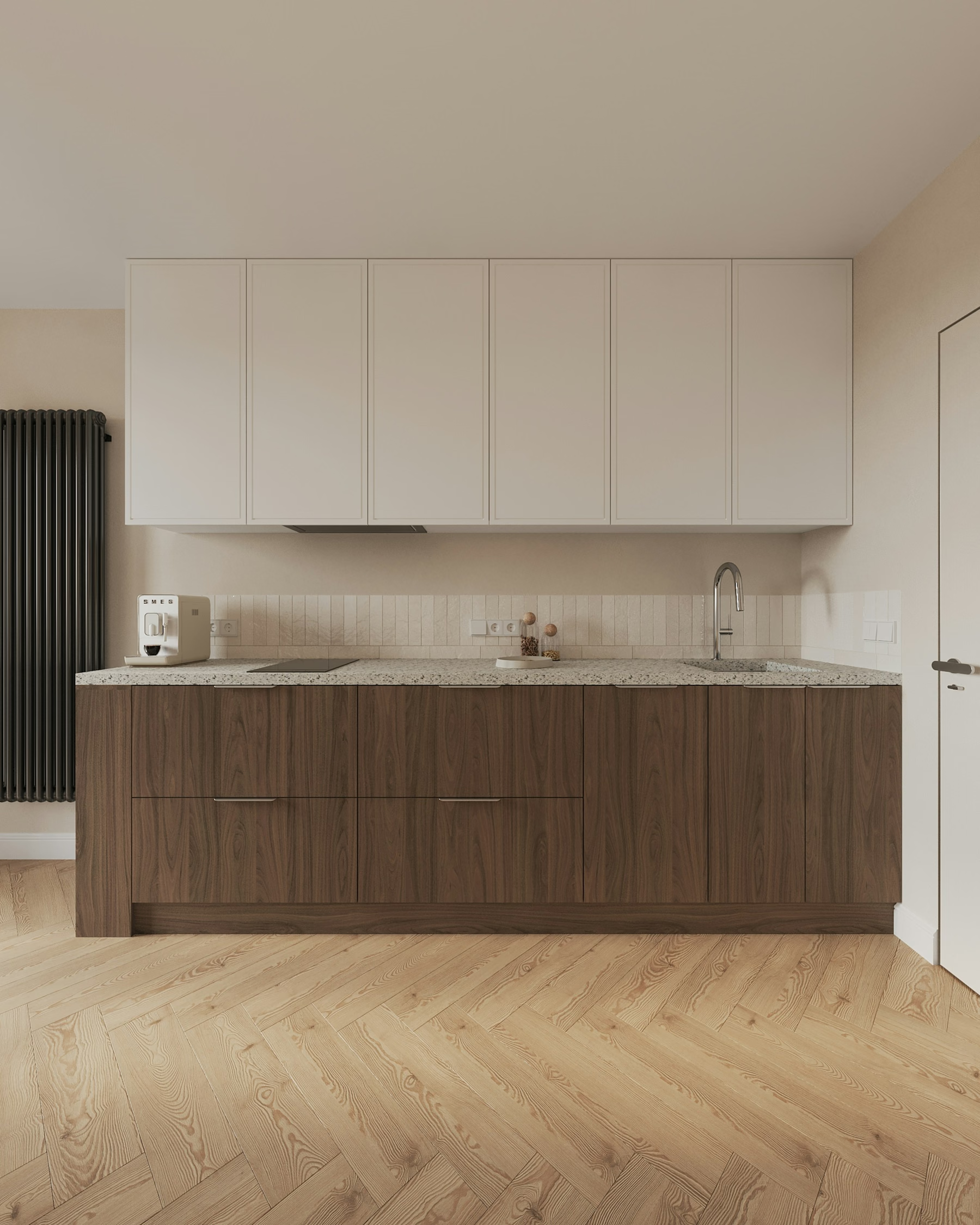
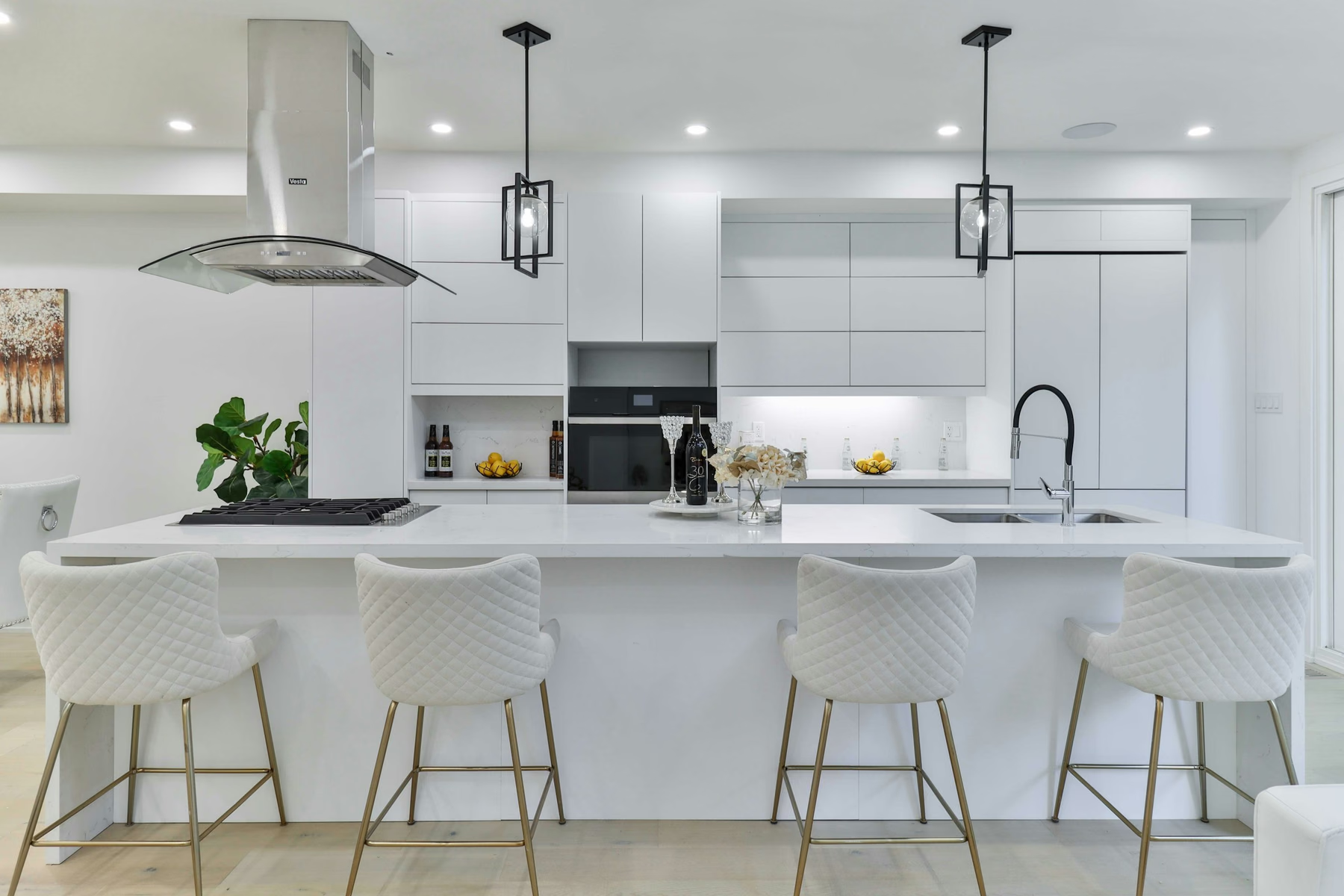
Flat-panel doors have no framing detail at all. They suit minimal, contemporary rooms and look their best in a single quiet colour or a warm wood tone. Because there are no lines to break the surface, the grain or colour and the hardware carry the design.
Raised-panel: traditional character
A raised panel adds a contoured centre and decorative edge profile. It brings depth and formality, and pairs naturally with crown moulding and classic hardware. It is a strong choice for traditional homes; in a very modern space it can feel out of place.
Glass-front and open shelving
A few glass-front doors or open shelves break up a long run of cabinets and give you somewhere to display things you love. Use them sparingly: everything behind glass needs to stay tidy.
How to choose
- Look at the trim, doors and flooring in the rest of the house and pick a style that belongs there.
- Think about upkeep: intricate profiles collect more dust than flat surfaces.
- Decide the door style first, then colour, then hardware and countertop.
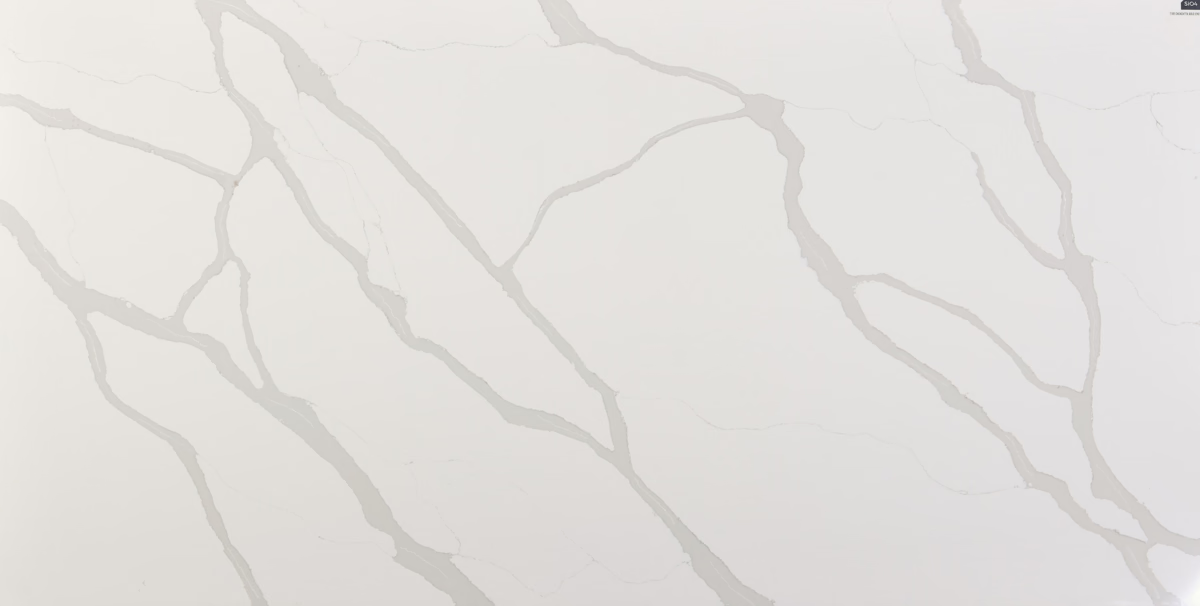
- Look at the countertop colour early: a strongly veined slab often works best with calmer doors (see pairing cabinets and countertops).
Not sure where to start? Sunsai’s Design Match asks about your style first and suggests a cabinet direction to react to.